QUOTE OF THE DAY

Showing posts with label health. Show all posts

Monday, July 21, 2008

Drink more Water to stay Healthy
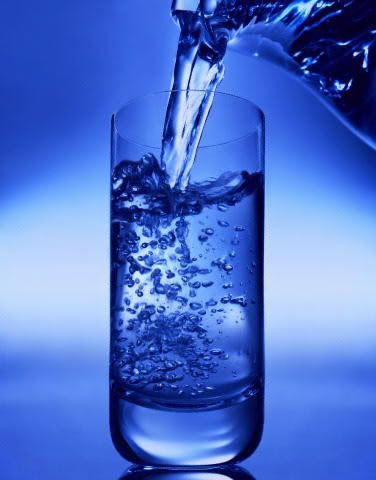


If we observe a fact, we will be able to know the value of water. We know that there is two third of water and one third of land on the globe. Similarly, our body consists of two third of water. The rest is matter. So, intake of more water is useful but not harmful to the man. Depending on the weather roughly two liters of water is spent from our body everyday. The water content in vegetables and the water that we take while taking food will be more than two liters. But you may ask why should we take more water. You may also ask that whenever there is necessity body demands water, then, why should we take water when there is no demand from the body.

What water does in the body?

Man needs food for survival. But to satisfy taste buds man runs after food of various tastes. If it is just for survival we need not crave for taste. When we take spicy and tasty food, we consume more water. Is the body demanding this water or our inclination towards taste is demanding water? It means we are taking water even when there is no necessity. With this, the stomach expands. Such food does not give strength to the body. When we go for tasty food, much waste material goes into the body. To purge out that waste material two liters of water is not sufficient. What does water do after entering the body? It attracts the waste material in the blood vessels and purges it out through urine.

When we take food for taste we have to take five liters of water to purge out waste material. But we are not taking that much of water. We do not like to drink more water though it is useful since it doesn't taste like sodas and our mind is not inclined towards it. Water, which gives us health and keeps us happy, is not drawing our attention it deserves. It is unfortunate.

No water while eating

We should not take water while eating food. This is a good habit. When food enters the stomach chemical fluids generate from the walls of the stomach that help digestion. If we take water along with food these fluids are diluted and the digestion power is reduced. Then the undigested food material, which is useful, is purged out along with the excreta. That is why human excreta are becoming food for some animals. Did you ever come across an animal eating the excreta of another animal? No. Why? Animals do not drink water while taking food. They drink water leisurely when the stomach is empty. What is this paradox? Man who has intellect does not know the principles of health, what even animals know. It is not that human being does not know it. He errs even after knowing. Because of his intelligence! Animals do not possess intelligence and they do not violate the laws of nature. Nature always protects the birds and animals.

After two hours of eating

There are some more aspects worth discussing. We add more oil, tamarind, chili, salt and various ingredients to give taste to our food. But they are not easily digestible. More water is needed to digest them. That is the reason why we take water while eating. As soon as the tasty food, which includes chili, salt, sour etc enters the mouth more saliva is produced and the food slips into the stomach without proper chewing. We have to chew food properly till it becomes liquid. If you take boiled vegetables saliva is not produced in the mouth. Then we do not have to take water. After one and a half or two hours of eating food, we have to take at least a liter of water. It helps digested food get assimilated into blood and push the waste material into intestines.

What causes sneeze, asthma, and allergies?

We suffer from sneezes, asthma, allergies and sinusitis during winter and rainy seasons. We try to satisfy ourselves blaming the weather for it. During winter and rainy seasons we consume less water. When we do not take required water histamine level in the body increases. With this we sneeze and suffer from allergies. Anti histamine medicines are used to control the illness. When we stop medicines, again sneezes and allergies come back.

Five liters of water a day

It is better to take at least five liters of water a day to avoid any illness. In a way every disease in the body has something to do with water. If we take less water blood pressure goes down and we feel weak. Our heartbeat also slows down. And you will find other ailments appearing in your body. Be certain that five liters of water a day insures your body from any disease.

Schedule for drinking water

We should also know how this water is to be taken and what is the appropriate time to take it. After rising from the bed one or one and a half liters of water is to be taken. The pressure of water in intestines makes clearing your bowels easy. After another 45 minutes one more liter of water is to be taken. It is useful to take water on empty stomach. We wash our eyes, face and body with water and brush our teeth to clean the mouth. The two, three liters of water that is taken in the morning is very useful in purging out the waste material from intestines. We should never take water immediately after taking food. Half an hour early to food and after two hours of meal 1 liter of water should be taken. We should not think that since we have taken three liters of water in the morning and there is no necessity of water till evening. In between also we have to take water. In all five liters of water in a day is good for the body. Refrigerated water is never to be taken. With this, there will be swelling of tonsils. Those whose digestive system is abnormal it is better to take warm water.

Advantages from five liters of water

Let us analyze the advantages of drinking five liters a day:

  1. Free motion.
  2. Hypertension will decrease. Hypertension is the result of salt not being purged out from the body. If more water is taken, it absorbs salt and sends it out through urine.
  3. Chronic headaches will decrease.
  4. The density of blood will come down. The salt we take along with vegetables increases the density of blood. The water we take will reduce the density and blood flow to brain is smooth. With this headache will reduce.
  5. Pains and swellings in joints will diminish. If there is more salt in our body, there will be a swelling of face, feet and hands. With the water we take, salt will go out and these swellings are controlled.
  6. Drinking more water helps kidneys work efficiently. The stones formed in the kidneys will be purged out along with water.
  7. When you are down with fever, temperature can be controlled with consumption of more water. Animals suffering from fever never eat grass. Instead they drink water.
  8. Stomach pain, if any, disappears when waste material is purged out if we consume more water.
  9. Urine will be clear. We become prone to urine infections if we do not take more water. Then you will find urine yellowish. This is an indication for low level of water in the body.
  10. Water cleanses the liver. When we suffer from jaundice, it is advantageous to take more water.

Better than sodas

Intake of more water is advantageous but not harmful. You may think that sodas, butter milk, coconut water and fruit juices are better. No doubt all these liquids are good. On entering the tissues they give energy to the body. But Water helps further by purging out the waste material from the tissues.

Dry cloth absorbs water but not the wet cloth. Similarly, pure water absorbs the waste material but juices and other liquids cannot perform that job because they contain some salt that is not helpful in absorbing waste material. That is why we can say water cures all diseases.


Thursday, May 1, 2008

14 Habits That Make You Fat


1. TV Watching

Prolonged TV watching is a strong predictor for obesity1. Recent research2 has proved that people who watch around two hours of TV per day are much more likely to be overweight than those who watched only half an hour per day. When you watch TV you are virtually motionless. Your heart rate, blood pressure and metabolic rate decline, resulting in burning 20 to 30 calories less per hour. Research by Harvard University4 has shown that there is a link between the amount children eat and the amount of television they watch.

2. Eating Too Fast

It is a habit of most people living in a fast paced society. Eating fast lets you eat too much before you are fully aware of it. It takes the brain about 15-20 minutes to start signaling feelings of fullness. Scientists suppose that fast eating is a risk factor for the metabolic syndrome3, a combination of the symptoms such as high blood pressure, obesity, high cholesterol, and insulin resistance.

3. Task Snacking

Task snacking refers to eating while doing other activities. if you often eat meals or snacks while working by yourself in front of your computer, while driving, watching TV, or standing at the kitchen counter, shopping with a friend, or talking on the phone, it's likely that the "task snacking" eating style is increasing your odds of becoming overweight or obese.

4. Frequent Fast Food Consumption

One of the big reasons we’re seeing more obesity in our society these days is that we are too stressed and busy to make healthy dinners at home, often opting to get fast food at the nearest drive-thru instead. Fast foods compromise the quality of the diet by replacing more healthy foods. Fast foods are known for having high content of saturated and trans-fat, low content of fiber and massive portion sizes, which leads to obesity.

5. Eating To Manage Feelings

Emotional eating is the practice of consuming large quantities of food (usually "comfort" or junk foods) in response to feelings (such as depression, anxiety, or loneliness) instead of hunger.

Experts estimate that 75% of overeating is caused by emotions. How many times have you found yourself scouring the kitchen for a snack, or absently munching on junk food when you’re stressed, but not really hungry?

6. Too Busy To Exercise

With all the demands on your schedule, exercise may be one of the last things on your to-do list. If so, you’re not alone. Americans live a more sedentary lifestyle than we have in past generations, yet our minds seem to be racing from everything we have to do. Unfortunately, from sitting in traffic, clocking hours at our desks, and plopping in front of the TV in exhaustion at the end of the day, exercise often goes by the wayside.

7. Your Friends Can Make You Fat

If you're putting on weight, you might want to take a look at who you're hanging around with. A study7 published in the July 26, 2007 edition of the New England Journal of Medicine suggests that obesity may be "socially contagious." The study was conducted on more than 12,000 people over 32 years, and concluded that having an overweight friend, sibling or spouse increased one's risk of obesity by 37 to 57 percent.

8. Lack Of Sleep

Sleep deprivation can increase your risk of obesity by boosting ghrelin (an appetite stimulating hormone) and lowering leptin (an appetite suppressor). The study5 from the University of Bristol in the United Kingdom found that, compared to an eight hours of shut-eye, each one-hour decrease in sleep duration was linked to almost 3% more body fat.

9. Unaware Of Calories And Fat

Many people eat foods with no idea of the calorie or fat value. This leads to weight gain and unhealthy eating habits because you can easily consume twice the normal calories required to maintain your weight, let alone lose weight, if you don't know how many calories you are eating.

10. Credit Cards

Your plastic may be affecting more than just your credit score. Visa conducted a study of 100,000 fast-food restaurant transactions and found that people who pay for their food with a credit card spend 30% more than those who pay with cash. For the average woman, who visits a fast-food restaurant once a week, that adds an extra 17,160 calories, or 4.9 pounds, per year.

11. Missing Meals

Research shows that people who eat breakfast are less likely to be overweight, and that morning meals seem to help those who've lost weight keep it off. Denise Bruner, MD, obesity specialist and former president of the American Society of Bariatric Physicians, says that skipping meals of any kind results in a "tremendous bout of compensatory hunger."

12. Uncomfortable Clothing

Researchers from the University of Wisconsin, La Crosse6 found that casual and comfortable clothing workdays promote increased physical activity. Specifically, study participants took an average of 491 (or 8%) more steps on Jeans Day than on those days in which they wore normal business attire. It is also estimated that study participants burned an average of 25 additional calories on Jeans Day with the extra steps and miles walked. Wearing casual clothing every day for 50 weeks of work translates into burning an additional 125 calories per week and 6,250 calories per year.

13. Neglecting Scales

Recent study from the University of Minnesota found that dieters who weighed themselves daily lost about 12 pounds over two years, while those who never did shed only four pounds. Other research, published in The New England Journal of Medicine, concluded that those who have daily weigh-ins (along with face-to-face support) are 82% less likely to regain five pounds than a control group without weigh-ins or support.

14. Boredom

A survey by the Priory Group in the U.K. found that more people ate when bored than when stressed.

Sources & References

  • 1. Hu FB, Li TY, Colditz GA, Willett WC, Manson JE. Television watching and other sedentary behaviors in relation to risk of obesity and type 2 diabetes mellitus in women. JAMA. 2003 Apr 9;289(14):1785-91. PubMed
  • 2. Shanthy A Bowman. Television-Viewing Characteristics of Adults: Correlations to Eating Practices and Overweight and Health Status. Prev Chronic Dis. 2006 April; 3(2): A38. PubMed
  • 3. Kral JG, Buckley MC, Kissileff HR, Schaffner F. Metabolic correlates of eating behavior in severe obesity. Int J Obes Relat Metab Disord. 2001 Feb;25(2):258-64. PubMed
  • 4. Ads for Unhealthy Foods May Explain Link Between Television Viewing and Overweight in Children
  • 5. Rontoyanni VG, Baic S, Cooper AR. Association between nocturnal sleep duration, body fatness, and dietary intake in Greek women. Nutrition. 2007 Nov-Dec;23(11-12):773-7. Epub 2007 Sep 20. PubMed
  • 6. Casual And Comfortable Clothing Workdays Promote Increased Physical Activity American Council on Exercise
  • 7. Nicholas A. Christakis, James H. Fowler. The Spread of Obesity in a Large Social Network over 32 Years Volume 357:370-379 July 26, 2007 Number 4 NEJM

Tuesday, January 8, 2008

Mood Foods: 6 Snacks to Kick Your Mind Into Gear


Mood food

Your Mood: Anxious

You need to stay sharp through a grueling job interview.

Your Meal: Half a grilled-chicken wrap at lunch, hold the mayo

Here's Why: Eating between 4 and 5 ounces of protein helps your brain create dopamine and norepinephrine, neurochemicals that keep you alert, says Judith Wurtman, Ph.D., author of The Serotonin Power Diet.

Your Mood: Stressed

You have to meet a deadline without being overwhelmed.


Your Meal: A handful of sesame seeds while you're working

Here's Why: Stress hormones can deplete your body's supply of magnesium, reducing your stress-coping abilities and increasing your risk of developing high blood pressure, says Elizabeth Somer, R.D., author of Food & Mood.

Your Mood: Restless

You need some serious shut-eye before the big day.

Your Meal: Nonfat popcorn half an hour before you go to bed

Here's Why: The carbs will induce your body to create serotonin, a neurochemical that makes you feel relaxed. "Make sure it's fat-free, because fat will slow the process of boosting serotonin levels," says Somer.

Your Mood: Depressed

Problems at home are doing you in.

Your Meal: Grilled salmon or sushi for dinner

Here's Why: A study in Finland found that people who eat more fish are 31 percent less likely to suffer from depression. And skip sweet, simple carbs­ — the inevitable sugar crash can actually deepen depression.

Your Mood: Insecure

Your confidence is waning as the night wears on.

Your Meal: A snack-size chocolate bar

Here's Why: Chocolate contains a host of chemicals to brighten your mood, Somer says, including anadamine, which targets the same receptors as THC, and phenylethylamine, which produces a cozy, euphoric feeling.

Your Mood: Flummoxed

You've forgotten your last two deadlines.

Your Meal: Pineapple chunks for a snack or a cup of berries in your oatmeal

Here's Why: Antioxidants from the most-colorful fruits and vegetables help pick off the free radicals that wear away at your memory. "Because your brain consumes so much oxygen, oxidants do heavy damage there," says Somer.

Foods that Cure

Minor tweaks in your diet can help fend off everything from splitting headaches to heart attacks. Three dietary tweaks from Joy Bauer, R.D., author of Joy Bauer's Food Cures:

Migraine Headaches
Migraines have many food causes. Keep a meal log for a month to see which triggers affect your head.

Eat This: Foods rich in healthy fats, such as olive oil, avocado, and salmon, help reduce inflammation, a catalyst for migraines. Riboflavin, found in lean beef and grains, helps cells maintain energy reserves, which can prevent the onset of migraines.

Not That: Nitrites, found in deli meats, bacon, and hot dogs; aspartame, the artificial sweetener found in diet soft drinks; caffeine

Irritable-Bowel Syndrome
One in five Americans is affected by IBS. A careful diet is the best cure.

Eat This: Soft foods and foods rich in soluble fiber, such as oatmeal, barley, bananas, and sweet potatoes

Not That: When symptoms are strong, limit vegetables, fruits, and whole grains, which are hard for the body to break down. Other common triggers: dairy products, spicy foods, alcohol, and caffeine

Cardiovascular Disease
A diet of heart-healthy fats may help prevent you from being one of the 1.5 million Americans who have heart attacks each year.

Eat This: Foods that boost good cholesterol (HDL), like canned tuna, mackerel, olive oil, avocado, and most nuts

Not That: Trans fat-laden foods, such as margarine; refined carbohydrates, which spike blood-thickening triglycerides; sugary soft drinks, juice, and white bread


Source: http://www.active.com/mindandbody/articles/Mood_Foods__6_Snacks_to_Kick_Your_Mind_Into_Gear.htm


Sunday, July 8, 2007

Body tricks everyone should know!

1. If your throat tickles, scratch your ear!

When you were 9, playing your armpit was a cool trick. Now, as an adult, you can still appreciate a good body-based feat, but you're more discriminating. Take that tickle in your throat; it's not worth gagging over. Here's a better way to scratch your itch: "When the nerves in the ear are stimulated, it creates a reflex in the throat that can cause a muscle spasm," says Scott Schaffer, M.D., president of an ear, nose, and throat specialty center in Gibbsboro, New Jersey. "This spasm relieves the tickle."

2. Experience supersonic hearing!

If you're stuck chatting up a mumbler at a cocktail party, lean in with your right ear. It's better than your left at following the rapid rhythms of speech, according to researchers at the UCLA David Geffen School of Medicine. If, on the other hand, you're trying to identify that song playing softly in the elevator, turn your left ear toward the sound. The left ear is better at picking up music tones.

3. Overcome your most primal urge!

Need to pee? No bathroom nearby? Fantasize about Jessica Simpson. Thinking about sex preoccupies your brain, so you won't feel as much discomfort, says Larry Lipshultz, M.D., chief of male reproductive medicine at the Baylor College of Medicine. For best results, try Simpson's "These Boots Are Made for Walking" video.

4. Feel no pain!

German researchers have discovered that coughing during an injection can lessen the pain of the needle stick. According to Taras Usichenko, author of a study on the phenomenon, the trick causes a sudden, temporary rise in pressure in the chest and spinal canal, inhibiting the pain-conducting structures of the spinal cord.

5. Clear your stuffed nose!

Forget Sudafed. An easier, quicker, and cheaper way to relieve sinus pressure is by alternately thrusting your tongue against the roof of your mouth, then pressing between your eyebrows with one finger. This causes the vomer bone, which runs through the nasal passages to the mouth, to rock back and forth, says Lisa DeStefano, D.O., an assistant professor at the Michigan State University college of osteopathic medicine. The motion loosens congestion; after 20 seconds, you'll feel your sinuses start to drain.

6. Fight fire without water!

Worried those wings will repeat on you tonight? "Sleep on your left side," says Anthony A. Starpoli, M.D., a New York City gastroenterologist and assistant professor of medicine at New York Medical College. Studies have shown that patients who sleep on their left sides are less likely to suffer from acid reflux. The esophagus and stomach connect at an angle. When you sleep on your right, the stomach is higher than the esophagus, allowing food and stomach acid to slide up your throat. When you're on your left, the stomach is lower than the esophagus, so gravity's in your favor.

7. Cure your toothache without opening your mouth!

Just rub ice on the back of your hand, on the V-shaped webbed area between your thumb and index finger. A Canadian study found that this technique reduces toothache pain by as much as 50 percent compared with using no ice. The nerve pathways at the base of that V stimulate an area of the brain that blocks pain signals from the face and hands.

8. Make burns disappear!

When you accidentally singe your finger on the stove, clean the skin and apply light pressure with the finger pads of your unmarred hand. Ice will relieve your pain more quickly, Dr. DeStefano says, but since the natual method brings the burned skin back to a normal temperature, the skin is less likely to blister.

9. Stop the world from spinning!

One too many drinks left you dizzy? Put your hand on something stable. The part of your ear responsible for balance -- the cupula -- floats in a fluid of the same density as blood. "As alcohol dilutes blood in the cupula, the cupula becomes less dense and rises," says Dr. Schaffer. This confuses your brain. The tactile input from a stable object gives the brain a second opinion, and you feel more in balance. Because the nerves in the hand are so sensitive, this works better than the conventional foot-on-the-floor wisdom.

10. Unstitch your side!

If you're like most people, when you run, you exhale as your right foot hits the ground. This puts downward pressure on your liver (which lives on your right side), which then tugs at the diaphragm and creates a side stitch, according to The Doctors Book of Home Remedies for Men. The fix: Exhale as your left foot strikes the ground.

11. Stanch blood with a single finger!

Pinching your nose and leaning back is a great way to stop a nosebleed -- if you don't mind choking on your own O positive. A more civil approach: Put some cotton on your upper gums -- just behind that small dent below your nose -- and press against it, hard. "Most bleeds come from the front of the septum, the cartilage wall that divides the nose," says Peter Desmarais, M.D., an ear, nose, and throat specialist at Entabeni Hospital, in Durban, South Africa. "Pressing here helps stop them."

12. Make your heart stand still!

Trying to quell first-date jitters? Blow on your thumb. The vagus nerve, which governs heart rate, can be controlled through breathing, says Ben Abo, an emergency medical- services specialist at the University of Pittsburgh. It'll get your heart rate back to normal.

13. Thaw your brain!

Too much Chipwich too fast will freeze the brains of lesser men. As for you, press your tongue flat against the roof of your mouth, covering as much as you can. "Since the nerves in the roof of your mouth get extremely cold, your body thinks your brain is freezing, too," says Abo. "In compensating, it overheats, causing an ice-cream headache." The more pressure you apply to the roof of your mouth, the faster your headache will subside.

14. Prevent near-sightedness!

Poor distance vision is rarely caused by genetics, says Anne Barber, O.D., an optometrist in Tacoma, Washington. "It's usually caused by near-point stress." In other words, staring at your computer screen for too long. So flex your way to 20/20 vision. Every few hours during the day, close your eyes, tense your body, take a deep breath, and, after a few seconds, release your breath and muscles at the same time. Tightening and releasing muscles such as the biceps and glutes can trick involuntary muscles -- like the eyes -- into relaxing as well.

15. Wake the dead!

If your hand falls asleep while you're driving or sitting in an odd position, rock your head from side to side. It'll painlessly banish your pins and needles in less than a minute, says Dr. DeStefano. A tingly hand or arm is often the result of compression in the bundle of nerves in your neck; loosening your neck muscles releases the pressure. Compressed nerves lower in the body govern the feet, so don't let your sleeping dogs lie. Stand up and walk around.

16. Impress your friends!

Next time you're at a party, try this trick: Have a person hold one arm straight out to the side, palm down, and instruct him to maintain this position. Then place two fingers on his wrist and push down. He'll resist. Now have him put one foot on a surface that's a half inch higher (a few magazines) and repeat. This time his arm will cave like the French. By misaligning his hips, you've offset his spine, says Rachel Cosgrove, C.S.C.S., co-owner of Results Fitness, in Santa Clarita, California. Your brain senses that the spine is vulnerable, so it shuts down the body's ability to resist.

17. Breathe underwater!

If you're dying to retrieve that quarter from the bottom of the pool, take several short breaths first -- essentially, hyperventilate. When you're underwater, it's not a lack of oxygen that makes you desperate for a breath; it's the buildup of carbon dioxide, which makes your blood acidic, which signals your brain that somethin' ain't right. "When you hyperventilate, the influx of oxygen lowers blood acidity," says Jonathan Armbruster, Ph.D., an associate professor of biology at Auburn University. "This tricks your brain into thinking it has more oxygen." It'll buy you up to 10 seconds.

18. Read minds!

Your own! "If you're giving a speech the next day, review it before falling asleep," says Candi Heimgartner, an instructor of biological sciences at the University of Idaho. Since most memory consolidation happens during sleep, anything you read right before bed is more likely to be encoded as long-term memory.


Source:
http://www.menshealth.com/cda/article.do?site=MensHealth&channel=health&category=other.diseases.ailments&conitem=98f183b403517010VgnVCM200000cee793cd____#%23%23

Sunday, July 1, 2007

52 PROVEN STRESS REDUCERS

1. Get up fifteen minutes earlier in the morning. The inevitable morning mishaps will be less stressful.

2. Prepare for the morning the evening before. Set the breakfast table. Make lunches. Put out the clothes you plan to wear, etc.

3. Don't rely on your memory. Write down appointment times, when to pick up the laundry, when library books are due, etc. ("The palest ink is better than the most retentive memory."- Old Chinese Proverb)

4. Do nothing you have to lie about later.

5. Make copies of all keys. Bury a house key in a secret spot in the garden. Carry a duplicate car key in your wallet, apart from your key ring.

6. Practice preventive maintenance. Your car, appliances, home and relationships will be less likely to break down "at the worst possible moment."

7. Be prepared to wait. A paperback book can make a wait in a post office line almost pleasant.

8. Procrastination is stressful. Whatever you want to do tomorrow, do today; whatever you want to do today, do it now.

9. Plan ahead. Don't let the gas tank get below onequarter full, keep a well- stocked "emergency shelf'' of home staples, don't wait until you're down to your last bus token or postage stamp to buy more, etc.

10. Don't put up with something that doesn't work right. If your alarm clock wallet, shoe laces, windshield wipers-whatever-are a constant aggravation, get them fixed or get new ones.

11. Allow 15 minutes of extra time to get to appointments. Plan to arrive at an airport one hour before domestic departures.

12. Eliminate (or restrict) the amount of caffeine in your diet.

13. Always set up contingency plans, "just in case." ("If for some reason either of us is delayed, here's what we'll do..." Or, "If we get split up in the shopping center, here's where we'll meet.")

14. Relax your standards. The world will not end if the grass doesn't get mowed this weekend.

15. Pollyanna-Power! For every one thing that goes wrong, there are probably 10 or 50 or 100 blessings. Count 'em!

16. Ask questions. Taking a few moments to repeat back the directions that someone expects of you, etc., can save hours. (The old "the hurrieder I go, the behinder I get" idea.)

17. Say "No!" Saying no to extra projects, social activities and invitations you know you don't have the time or energy for takes practice, self-respect and a belief that everyone, everyday, needs quiet time to relax and to be alone.

18. Unplug your phone. Want to take a long bath, meditate, sleep or read without interruption? Drum up the courage to temporarily disconnect.

(The possibility of there being a terrible emergency in the next hour or so is almost nil.)

19. Turn "needs" into preferences. Our basic physical needs translate into food, water, and keeping warm. Everything else is a preference. Don't get attached to preferences.

20. Simplify, simplify, simplify.

21. Make friends with nonworriers. Chronic worrywarts are contagious.

22. Take many stretch breaks when you sit a lot.
23. If you can't find quiet at home, wear earplugs.

24. Get enough sleep. Set your alarm for bedtime.

25. Organize! A place for everything and everything in its place. Losing things is stressful.

26. Monitor your body for stress signs. If your stomach muscles are knotted and your breathing is shallow, relax your muscles and take some deep, slow breaths.

27. Write your thoughts and feelings down on paper. It can help you clarify and give you a renewed perspective.

28. Do this yoga exercise when you need to relax: Inhale through your nose to the count of eight. Pucker your lips and exhale slowly to the count of 16. Concentrate on the long sighing sound and feel the tension dissolve. Repeat 10 times.

29. Visualize success before any experience you fear. Take time to go over every part of the event in your mind. Imagine how great you will look, and how well you will present yourself.

30. If the stress of deadlines gets in the way of doing a job, use diversion. Take your mind off the task and you will focus better when you're on task.

31. Talk out your problems with a friend. It helps to relieve confusion.

32. Avoid people and places that don't fit your personal needs and desires. If you hate politics, don't spend time with politically excited people.

33. Learn to live one day at a time.

34. Everyday, do something you really enjoy.

35. Add an ounce of love to everything you do.

36. Take a bath or shower to relieve tension.

37. Do a favor for someone every day.

38. Focus on understanding rather than on being under stood, on loving rather than on being loved.

39. Looking good makes you feel better.

40. Take more time between tasks to relax. Schedule a realistic day.

41. Be flexible. Some things are not worth perfection.

42. Stop negative self-talk: "I'm too fat, too old, etc..."

43. Change pace on weekends. If your week was slow, be active. If you felt nothing was accomplished during the week, do a weekend project.

44. "Worry about the pennies, and the dollars will take care of themselves." Pay attention to the details in front of you.

45. Do one thing at a time. When you are working on one thing, don't think about everything else you have to do.

46. Allow time every day for privacy, quiet and thinking.

47. Do unpleasant tasks early and enjoy the rest of the day.

48. Delegate responsibility to capable people.

49. Take lunch breaks. Get away from your work in body and in mind.

50. Count to 1,000, not 10, before you say something that could make matters worse.

51. Forgive people and events. Accept that we live in an imperfect world.

52. Have an optimistic view of the world. Most people do the best they can.